
We are in the science of supportING business decisions depth, quality and agility using Data and AI.
Services and solutions to support business leaders throughout their analytics and automation journey:
- Visioning how data and automation generate business value
- Prioritizing use cases to increase shareholder value
- Designing programs to deliver measurable results
- Managing risks, yet agile during implementation
- Supporting transformation to a data-driven organization
We help business leaders leverage data analytics and automation to increase revenue, improve operational efficiency, and deploy capital more effectively.
OUR METHODOLOGY
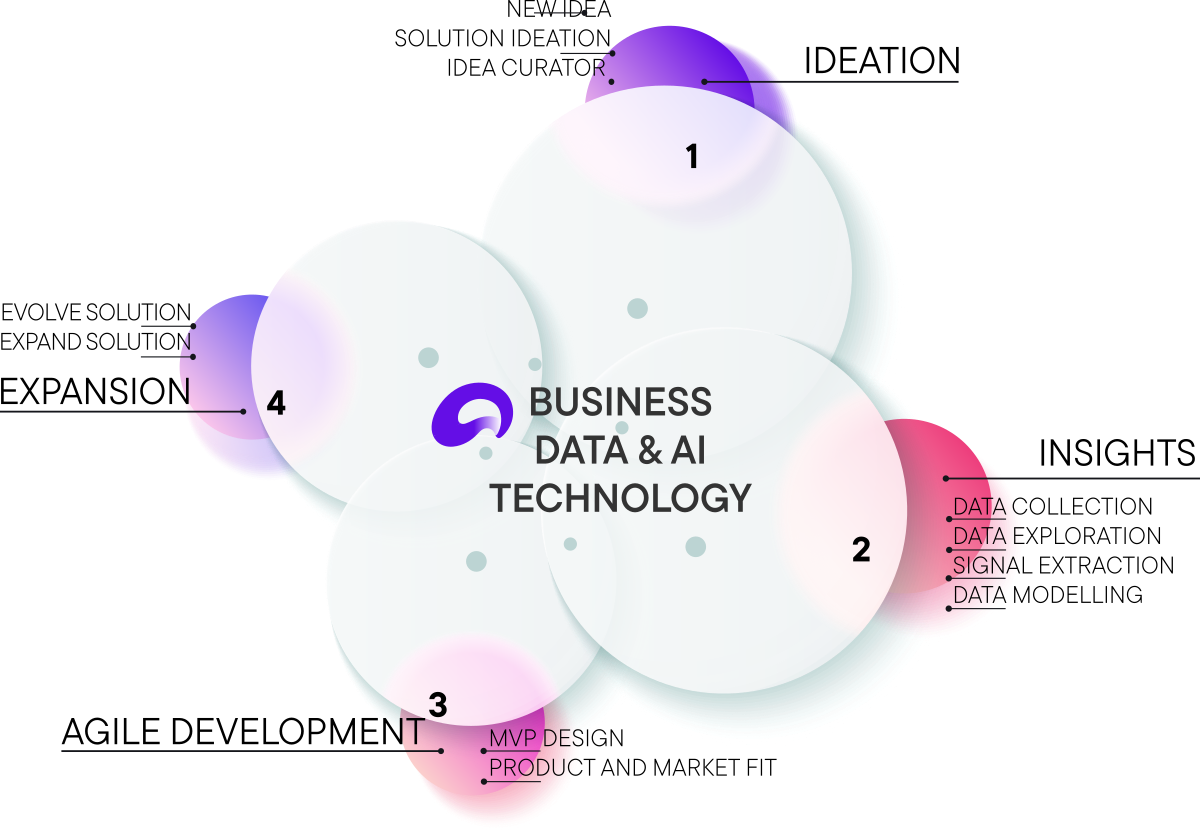
Our method focus on agile data driven innovation to enable your success.
PARTNERING WITH DHAUZ UNLOCKS A TEAM OF EXPERTS, WORKING ALONGSIDE YOU TO REACH YOUR GOALS FASTER. UNLOCK RESOURCES, EXPERTISE, AND STRUCTURED METHODOLOGY TO EMPOWER YOUR TEAM TO DELIVER EVEN MORE VALUE OVER TIME.
INSIGHTSTUDIOS TM ADVANTAGE
The Insight Studio® is a dedicated cross-functional team that continuously identifies and prioritizes use cases to deliver business insights that will drive better business outcomes.
Use cases are prioritized after initial hypotheses are proven, which might include building analytical models and developing custom solutions.
During implementation, benefits are tracked via existing or new dashboards and compared to initial targets.
Insight Studio® is also the methodology we used to develop and deploy our decision support systems.
INDUSTRIES WE SERVE
Our team has extensive data analytics and industry expertise across different verticals, helping companies with their data strategy, setting up a data lake, and extracting valuable insights from advanced analytics.
Explore some of the industries that we served and the benefits we helped our customers to unlock.
Consumer Goods
Transform data into actionable insights that drive personalized consumer experiences, optimize operations, and fuel innovation across the value chain.
Consumer goods companies operate in a fast-paced, highly competitive environment, where consumer preferences shift rapidly and operational efficiency is critical.
AI and advanced analytics empower these companies to deeply understand consumer behavior through real-time data, enabling hyper-personalized marketing, dynamic pricing, and tailored product recommendations. This not only enhances customer satisfaction and loyalty but also increases conversion rates and revenue.
Consumer Insights
- Data-RICH customer segmentation and targeting
- Data-driven cross-sell and up-sell tactics (NBA / NBO)
- Data-driven Marketing Mix Modeling
Pricing
- Analyze real-time market data, competitor pricing, demand elasticity, and inventory levels to recommend optimal prices.
- Identify correlation between promotions and true incremental sales.
- Uncover price-driven customer behavior to design more effective pricing strategies.
Revenue Growth
- Automated lead generation, qualification and prioritization
- Data-driven promos and bundles tailored for each customer
- Predictive NPS and strategies to increase customer retention
Supply Chain
- Improve forecasting accuracy and reduce stockouts.
- Plan and contract better routes to minimize waste and potential frauds.
- Automate procurement and planning processes and reporting.
Natural Resources
Enhance operational efficiency, reduce environmental impact, and manage risk through intelligent automation, predictive insights, and data-driven sustainability strategies.
Mining, forestry, water, and energy sectors face increasing pressure to balance productivity with environmental responsibility. AI and analytics offer powerful tools to optimize exploration, extraction, and processing by analyzing geological data, sensor inputs, and equipment performance in real time. This enables smarter resource allocation, predictive maintenance, and reduced downtime, ultimately improving yield and lowering operational costs.
Maintenance & Repair
- Analyze sensor data from equipment to predict potential failures.
- Identify root causes of equipment issues, enabling effective repairs.
- Optimize dispatch of field technicians, improving response times and costs.
Regulatory Compliance
- Automated transaction monitoring and communications with regulatory bodies.
- Natural language processing and pattern recognition to identify potential violations.
- Identify potential non-compliance or risks to avoid fines or reputational damage.
Sustainability
- Track greenhouse gas emissions, water usage, and waste output in real time.
- Automate analysis of sustainability metrics, streamlining ESG reporting.
- Simulate environmental impact of different operational scenarios.
Health & Safety
- Detect unsafe conditions and trigger immediate alerts to prevent accidents.
- Analyze historical incident data to prevent risks and workplace injuries.
- Wearable devices helping prevent accidents or health issues / risks.
Agri Business
Optimize productivity and sustainability across the agricultural value chain through data-driven decision-making, predictive insights, and automation.
Through the integration of satellite imagery, IoT sensors, and machine learning models, companies can monitor crop health, soil conditions, and weather patterns in real time. This allows for precise application of water, fertilizers, and pesticides, reducing waste and improving yields. Beyond the farm, AI enhances supply chain efficiency and market responsiveness.
Crop Performance
- Advanced analytics to predict yields and help farmers plan harvests.
- AI-driven models simulate climate scenarios to support crop selection and planting schedules.
- Analyze data from drones, satellites, and IoT sensors to guide precise application of water and fertilizers.
Operational Efficiency
- Schedule labor and machinery more efficiently based on field conditions, crop readiness, and weather forecast.
- Predictive algorithms monitor equipment health and anticipate maintenance needs.
Supply Chain
- Forecast demand, optimize inventory levels, and maximize return on capital.
- Streamline logistics to reduce waste and lower transportation costs.
- Plan and contract better transportation routes, minimizing waste and fraud.
Revenue Growth
- Behavior-based segmentation to drive personalized marketing campaigns.
- Real-time pricing based on supply, demand, and competitor pricing.
Retail
Create seamless, personalized, and data-driven shopping experiences that boost customer loyalty, optimize operations, and drive profitable growth.
Retailers are uniquely positioned to benefit from AI and analytics due to the vast amount of consumer, transaction, and operational data they generate. One of the most impactful areas is personalized customer engagement. AI can analyze browsing behavior, purchase history, and contextual data to deliver tailored product recommendations, targeted promotions, and dynamic content across digital and physical channels.
Consumer Engagement
- Deliver tailored product suggestions in real time, boosting conversion rates.
- Segment customers to design more effective and engaging campaigns.
- Chatbots and virtual assistants provide instant, personalized support and guidance, enhancing the shopping experience.
Inventory Optimization
- Analyze historical sales, seasonality, promotions, and external factors to accurately predict demand per DFU.
- Restocking decisions based on current inventory levels, sales velocity, and lead times, without manual intervention.
- End-to-end visibility across the supply chain.
Store Operations
- Forecast foot traffic and sales patterns to create optimal staffing schedules.
- Track conversion rates, dwell time, staff productivity, and training needs.
- RPA assisted inventory checks freeing up staff to focus on customer engagement.
Supply Chain
- Analyze traffic patterns and fuel costs to find efficient transportation routes.
- Track supplier reliability to manage consistent supply and minimize risks.
- Align production and distribution plans with demand signals.
HealthCare
Improve operational efficiency to minimize staff shortages and margin pressures while keeping high care quality standards.
From ever-trending rising costs of care to capacity constraints, organizations are expected to reinvent how care is delivered. Data and AI is the strategic component to achieve it.
Capacity Shortage
- Accurately estimate patient demand with predictive analytic algorithms.
- Determine optimal balance between demand and capacity with analytics.
- Uncover hidden patterns to reduce length of stay with machine learning and deep learning techniques.
Patient Engagement
- More personalized patient experiences with unsupervised statistical models.
- Determine the next best action for each patient with machine learning.
- Help customers navigate their care journey with real-time data analytics.
Pressured Margins
- Integrate capabilities from planning to care delivery with forecasting tools and network optimization techniques.
- Data analytics to support procurement to buy at the right cost and quantity.
- Unleash productivity with RPA and LLM solutions to reduce admin tasks.
Control Tower
- Keep track of your financial metrics and influence your demand mix with predictive modelling and real-time data analytics.
- Ability to forecast revenue scenarios combining operational metrics and econometric modelling.
Hospitality
Deliver hyper-personalized guest experiences, optimize operations, and drive revenue growth through data-driven insights and automation.
Deeply understand guest preferences and behavior, enabling highly personalized experiences.
From dynamic pricing and tailored marketing to AI-powered chatbots and recommendation engines, these technologies help create seamless, customized journeys for each guest.
Guest Preferences
- Booking history, spending patterns, and in-property behavior to build detailed guest profiles and predict future preferences.
- Demographic data and contextual factors to anticipate needs and customize experiences accordingly.
Pricing & Promotions
- Adjust promos based on demand, booking patterns, and local events.
- Data-driven suggestions for upgrades or add-ons increasing per-guest revenue.
- Segment guests by behavior, preferences, and spending history to deliver targeted promotions.
Guest Experiences
- Content and promotional offers based on guest profiles and behavior.
- Monitor guest activity and feedback in real time to trigger proactive responses.
- Simulate customer flows to identify potential activation areas and trigger specific geo-based promos.
Operational Efficiency
- Forecast guest traffic and demand patterns to optimize staff scheduling.
- Track usage patterns and supplier performance to optimize inventory.
- AI systems adjust lighting, heating, and cooling based on occupancy and usage patterns, to reduce energy consumption and costs.
Pharma
Accelerate drug discovery, optimize operations, and enhance commercial effectiveness while maintaining compliance and improving patient outcomes.
From regulatory compliance to rising R&D costs to pricing pressures and data security, advanced analytics can support Pharma companies to optimize costs and accelerate revenue growth, without compromising security and compliance.
R&D
- Accelerate data sets interpretation to define molecules with high propensity for R&D success.
- Real-time signal processing during testing for clinical adjustments, risk mitigation, and efficiency.
- Manage patents and R&D pipeline with AI agents focusing staff on value-added activities and risk mitigation.
Supply Chain
- Improve forecasting accuracy and optimize inventory levels.
- Optimize transportation routes, minimize waste, insurance costs and potential frauds.
- Increased inventory visibility allowing teams to optimize capital investments.
Manufacturing
- Monitor and analyze equipment signals to identify risks or maintenance needs.
- Video analytics to identify quality deviations / anomalies versus standards.
- Automate regulatory compliance with AI agents’ support.
Commercial
- Improve customer segmentation to tailor your go-to-market strategy.
- Attribute-based forecasting to predict sales by territory at greater accuracy.
- Data-driven next best action (NBA) and next best offer (NBO) to support sales reps and drive conversion.
Utilities
Optimize grid operations, enhance customer engagement, and accelerate the transition to clean energy through predictive insights and intelligent automation.
AI and advanced analytics enable utility companies to modernize grid management by predicting equipment failures, balancing supply and demand in real time, and integrating renewable energy sources more effectively. On the customer side, AI enhances engagement through personalized energy usage insights, dynamic pricing models, and intelligent customer service chatbots.
Grid Optimization
- Detect anomalies in grid behavior and predict potential outages.
- Forecast electricity demand by analyzing historical usage patterns, weather data, and real-time consumption, to support load management.
Predictive Maintenance
- AI models can analyze sensor data to understand asset performance issues.
- Machine learning models can predict the likelihood of future equipment failures.
- Data used to create digital twin models to support planning and operations teams.
Regulatory Compliance
- Monitor transactions and interactions with main regulatory bodies.
- Natural language processing to identify potential risks and streamline reporting.
- Identify potential non-compliance risks to avoid fines or reputational damage.
Customer Engagement
- Transaction history and usage patterns to create personalized offers.
- Predictive NPS and strategies to increase customer retention.
- Analyze customer behavior and preferences to define next best offer (NBO).
Telecom
Deliver hyper-personalized customer experiences, optimize operations, and unlock new revenue streams through intelligent automation and data-driven innovation.
Predictive analytics can anticipate network congestion, detect anomalies, and enable proactive maintenance, improving service reliability and reducing downtime. AI also enhances customer service through intelligent virtual assistants and real-time sentiment analysis, allowing telecom providers to resolve issues faster and personalize support interactions.
Customer Experience
- Identify data-driven offers and proactive outreach to reduce churn.
- Predictive NPS and strategies to increase customer loyalty.
- Analyze customer behavior and preferences to define next best offer (NBO).
Revenue Growth
- Recommend relevant products or service upgrades to each customer based on their behavior and preferences, increasing average revenue per user (ARPU).
- Personalized promotions to improve conversion rates and maximize revenue.
Operations
- Streamline repetitive back-office tasks such as billing, provisioning, and compliance reporting, improving efficiency and reducing operational costs.
- Forecast future demand for network capacity and services.
- Anticipate network issues to proactively reduce service disruptions.
Maintenance & Repair
- Predict equipment failures before they occur by analyzing equipment performance data.
- Detect anomalies in grid behavior and predict potential outages.
- Optimize the dispatch of field technicians, improving response times and reducing operational costs.
Oil & Gas
Enhance operational efficiency and drive profitability while diversifying the energy portfolio and reducing carbon footprint.
While facing challenges like managing market fluctuations, navigating regulations, complex supply chains and transitioning to renewable energy, O&G companies need to improve efficiency and profitability. Data analytics can support the sector by optimizing operations, enhancing decision-making, improving safety, and enabling predictive maintenance, all contributing to sustainability and cost reduction.
Upstream
- Improve the accuracy of seismic imaging and geological modeling, to support exploration decisions.
- Real-time monitoring of wells and equipment for faster issue resolution.
- Route optimization for materials, crew and fuel, increasing safety and reducing operational costs.
Downstream
- Predict consumer behavior to better align production with market demand.
- Improve inventory management and demand forecasting to maximize revenue.
- Optimize refining processes by analyzing input materials and adjusting parameters to maximize yield and optimize operations.
Midstream
- Data-driven insights to optimize logistics and transportation scheduling.
- Real-time pipeline monitoring to detect anomalies to prevent accidents and environmental damage.
- Accurate demand forecast to optimize pipeline capacity and resource allocation.
Sustainability
- Real-time performance monitoring of renewable assets to enable accurate kWh forecasting and better grid integration.
- Monitor carbon footprint to support decarbonization goals.
- AI agents to support regulatory demands in monitoring and reporting.
Financial Services
Enhance decision-making, personalize customer experiences, and improve risk management while driving operational efficiency and innovation.
AI and analytics are transforming the financial services industry by enabling smarter, faster, and more personalized decision-making. One of the most impactful areas is in risk management and fraud detection. AI models can detect anomalies in real time, flagging suspicious transactions and reducing false positives. Predictive analytics also enhances credit scoring and underwriting by incorporating alternative data sources, enabling more inclusive and accurate lending decisions.
Customer Engagement
- Offer tailored, data-driven financial advice and product suggestions.
- Virtual assistants provide 24/7 support for routine inquiries, while natural language processing (NLP) helps escalate complex issues to human agents with full context.
Risk Management
- Analyze transaction patterns in real time to detect anomalies and flag suspicious activities, while reducing false positives.
- Incorporate alternative data sources into credit scoring models to improve accuracy.
- Monitor and manage liquidity risk by forecasting cash flow needs and identifying potential shortfalls in real time.
Regulatory Compliance
- Monitor transactions and interactions with main regulatory bodies.
- Natural language processing to identify potential risks and streamline reporting.
- Monitor trading activity across multiple platforms in real time to detect risky or fraudulent patterns.
Operational Efficiency
- Automate the financial and management closing process (FP&A).
- Natural Language Processing (NLP) can extract, classify, and validate data from unstructured sources to support workflow automation.
- Analyze historical investment performance to forecast expected return on capital projects.